


Imagine being in a relationship where one moment you are showered with love and attention, and the next, you are ignored and criticized.
Picture Sarah, who feels on top of the world when her new friend, Jake, showers her with compliments and attention. Suddenly, Jake starts ignoring her calls and messages, leaving Sarah confused and hurt.
Two weeks later, he calls and says he has been extremely busy. He tells her she is precious, and she believes he really does care; he just needed time.
Then after a period of time, he tells her that he just wants to be friends and isn't interested in a relationship, but if she wants to be 'romantic,' that is okay with him. This comment is so cold and disrespectful; it hits Sarah like a rock.
When Sarah backs away to the friend zone, Jake becomes upset and tells friends Sarah walked away from him.
This type of behavior leads to unstable relationships marked by deep confusion and emotional turbulence. Sarah doesn’t understand Jake's cycle of affection and withdrawal, furthermore, all of her attempts to discuss it are either ignored or deflected.
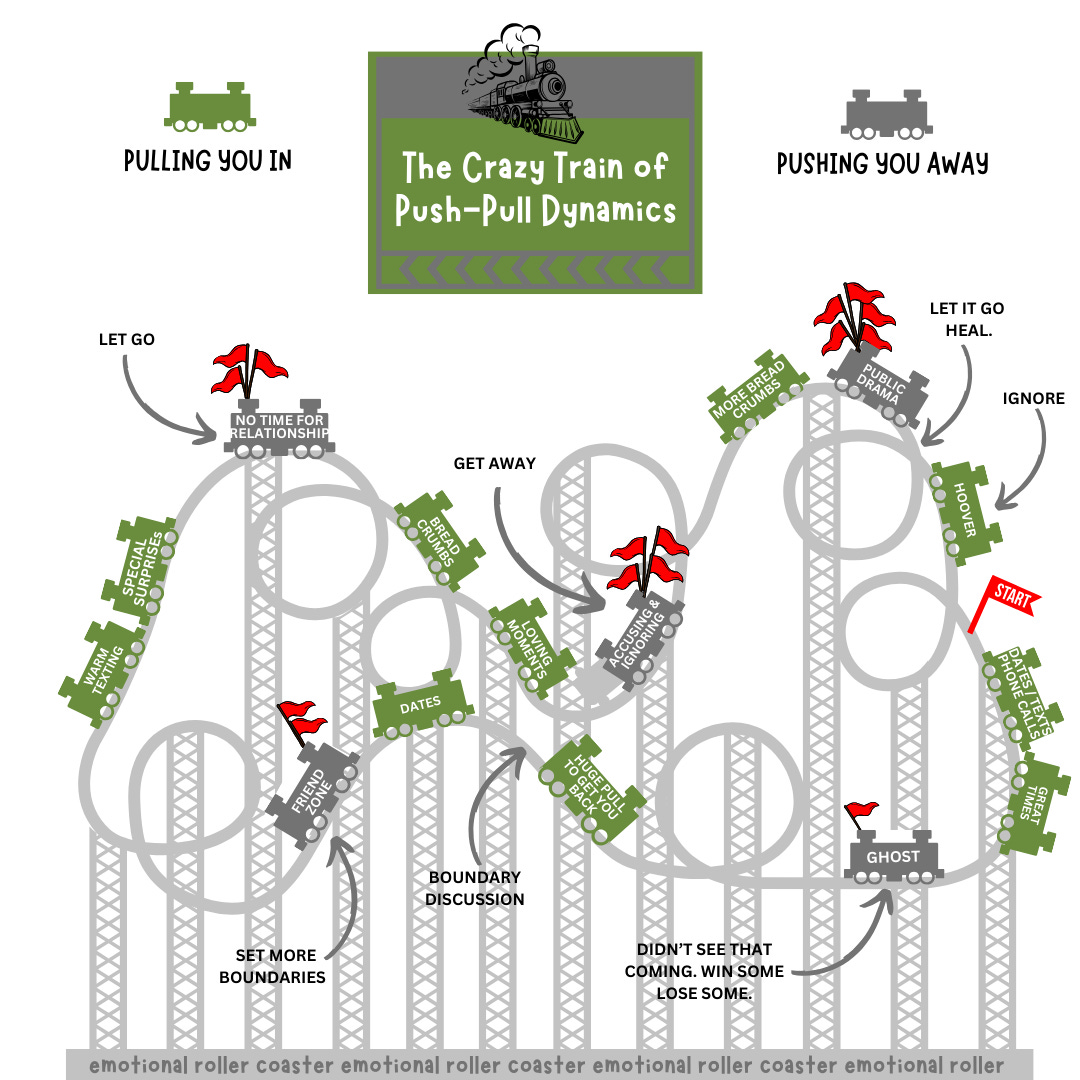
UNDERSTANDING PUSH-PULL DYNAMICS
As with Sarah and Jake, push-pull behavior involves one partner drawing the other in close, then pushing them away in a cyclical pattern that often leads to unstable relationships marked by emotional turbulence and confusion.
The pull phase is heartwarming, featuring compliments and attention that release neurotransmitters like dopamine and serotonin. Affirmations such as being told you are precious, special, and loved are universally cherished and enhance self-esteem and happiness.
Conversely, the push phase brings deep pain, demoralization, and rejection through ghosting, benching, friend-zoning, devaluation, and criticisms. The partner becomes starved for affection during the push phase. By the end of the push phase, the rejected partner has such a deep need for affirmation of love that gestures of affection offered during the next pull phase are eagerly devoured for emotional sustenance.
While occasional push-pull behaviors can occur in many relationships, the destabilizing effects arise when the behavior is pervasive, creating a damaging cycle that becomes difficult to escape when love is involved.
The affected partner experiences a cycle of hope and distress and finds it difficult to understand the relationship. Staying in this relationship can have severe emotional effects on the partner who has been repeatedly affirmed and then neglected. Staying in a push-pull relationship can lead to trauma bonding, so it is essential to be aware of these signs.
WHY PEOPLE ENGAGE IN PUSH-PULL DYNAMICS
A partner may engage in push-pull dynamics due to underlying emotional or psychological issues. In some cases, the behavior is so deeply ingrained that the individual may not realize they are manifesting the problem and may even blame their partner, turning themselves into the victim.
Fear of Intimacy: Deep-seated fears of vulnerability, rejection, or abandonment can cause individuals to fluctuate between seeking closeness and withdrawing. By doing so, they avoid the risk of being hurt by someone they care about.
Insecurity: Those with low self-esteem or feelings of inadequacy doubt their worthiness of love and acceptance. They push their partner away to shield themselves from perceived rejection or to test their partner’s loyalty and commitment.
Ambivalence: Conflicting emotions about the relationship lead to ambivalence, causing individuals to fluctuate between wanting to be close and needing space.
Power Dynamics: Some individuals use manipulative push-pull behavior to exert control. It creates an unstable dynamic that allows them to maintain a sense of dominance and keep their partner off balance.
Communication Difficulties: The inability to articulate feelings can lead to misunderstandings and conflicts. Individuals may resort to distancing or creating drama to cope with communication inadequacies.
Unresolved Trauma: Past trauma and neglect can leave deep emotional scars, impairing an individual's ability to form secure, stable attachments.
Attachment Styles: Insecure attachment styles lead to paradoxical oscillations between craving intimacy and fearing rejection or vulnerability. Partners are pushed away to test commitment or in a preemptive move from perceived rejection.
CHARACTERISTICS AND MANIFESTATIONS
The cycle of affection and withdrawal can take on various oscillating forms with actions ranging from intense closeness, affection and attention to aloofness or outright hostility. The pull phase stimulates the reward center of our brain, enhancing self-esteem and happiness. In the push phase, we feel deep pain, demoralization, and rejection. Recognizing and understanding these behaviors is essential to set appropriate boundaries and help prevent the emotional and psychological upheaval that being in this type of relationship will bring.
PULLING IN BEHAVIOR
Intermittent Reinforcement (Breadcrumbing): Providing just enough encouragement and love to keep their partner hopeful. The breadcrumbs may likely be tailored to the partner's love language—kind words, quality time, acts of service, etc.
Love Bombing: In the initial stages of the relationship, the push-pull partner may overwhelm their partner with excessive attention, compliments, affection, or gifts. This intense display of affection creates a powerful emotional bond, making the partner feel cherished and special.
Compliments: Frequent and intense compliments boost the partner’s self-esteem and reinforce the positive aspects of the relationship. This behavior can make the partner feel valued and loved, re-engaging the strong emotional connection.
Apologies: Offering sincere-seeming apologies and promises to change after a period of pushing away can draw the partner back in. These apologies give the partner hope that things will improve, renewing their commitment to the relationship.
Intimacy: Engaging in physical closeness, such as hugging, kissing, or other forms of physical affection, strengthens the emotional bond. These moments of intimacy make the partner feel loved and desired, counteracting previous feelings of rejection.
Quality Time: Spending meaningful and focused time together can deepen the connection. By engaging in activities that the partner enjoys, the push-pull partner reinforces the sense of closeness and partnership.
Verbal Affirmations: Expressing love, appreciation, and admiration verbally reassures the partner of their worth. These affirmations counteract the negative effects of push behaviors and make the partner feel appreciated and important.
Acts of Service: Doing thoughtful things for the partner, such as cooking meals or helping with tasks, demonstrates care and commitment. These acts of service can make the partner feel supported and valued.
Future Promises (Future Faking): Making plans for the future creates a sense of hope and stability. These conversations suggest a long-term commitment, encouraging the partner to stay invested in the relationship.
Hoovering: Hoovering is a manipulation tactic used to maneuver people back into a toxic relationship. When a toxic partner fears that their target is leaving, they may engage in a variety of tactics to engage with a person and "suck" them back into their life.
PUSHING AWAY BEHAVIOR:
Ghosting: Abruptly cutting off all communication without any explanation, leaving the partner feeling abandoned and confused, reinforcing feelings of insecurity and instability in the relationship.
Benching: After dating, being put on the back burner as a backup option. A person may occasionally text, call or flirt, but won't commit to making any plans.
Aloofness: Characterized by emotional detachment and unresponsiveness, the push-pull partner may become distant, showing little interest in their partner’s life or emotions. This creates a barrier to intimacy and makes the partner feel unimportant.
Criticism: Constant fault-finding and criticizing the partner as a way to push them away. This behavior undermines the partner’s self-esteem and creates emotional distance, making the partner feel inadequate and unloved.
Silent Treatment: Deliberately ignoring the partner and refusing to communicate can be a powerful form of emotional manipulation. The silent treatment creates anxiety and uncertainty, leaving the partner desperate for resolution and closeness.
Withdrawal: Physical or emotional withdrawal involves reducing the time spent together or withholding emotional support. This behavior can make the partner feel neglected and isolated, further destabilizing the relationship.
Hostility: Displaying anger, irritability, or aggression creates a hostile environment, instills fear and anxiety, making it difficult for the partner to feel safe and secure.
Avoidance: Avoiding discussions about the relationship or future plans prevents emotional intimacy. By dodging important conversations, the push-pull partner keeps the relationship in a state of limbo, causing frustration and confusion.
Breaking Promises: Frequently breaking promises or failing to follow through on commitments erodes trust. This behavior signals unreliability and disinterest in the partner’s needs, further destabilizing the relationship.
Creating Drama: Baseless accusations and criticisms, especially in the presence of others, are an extremely toxic way of creating separation in a push phase of the cycle.
Specific Issues with Narcissists and Push-Pull
Narcissists often engage in push-pull dynamics due to their disordered attachment history. They struggle to maintain healthy relationships and communication, cycling through stages of praise and devaluation, creating strong and deeply unsettling dynamics.
Because narcissism falls on a spectrum, the push and pull behaviors range in severity. Regardless of the degree of narcissism, their pull behavior helps them feel in control, and your subsequent adoration validates their inflated sense of self-worth. Their push behavior makes them regain control by keeping you off-balance and anxious.
They start with love bombing to obtain a new narcissistic supply. Once the narcissist feels secure in the attachment, love bombing stops. Push behavior is characterized by devaluation and emotional withdrawal; the narcissist begins to criticize, ignore, or demean their partner.
The narcissist’s pattern of pushing away can also include tactics such as silent treatment, gaslighting, and breaking promises, further deepening the emotional turmoil and confusion in the relationship.
Hoovering from a narcissist can take on many different forms depending on how far away their partner has drifted. It could include a return to love bombing to draw the partner back in or feigning crises, creating drama, fake martyrdom, self-victimization, stalking, or smear campaigns to reclaim their partner's attention. These manipulations can be humiliating and painful experiences to go through, especially when they are done publicly.
For more in-depth reading about this topic, I recommend this PsychCentral article: Push-Pull Dynamic of a Romantic Relationship with a Narcissist.
Push-pull dynamics can have significant long-term emotional impacts on the affected partner, including anxiety, depression, and difficulty trusting future partners. Understanding the various signals will help provide early detection for quicker resolution and healing should you find yourself in a relationship with a partner that cycles through these behaviors.
Part 2 of 'Push-Pull Dynamics will include the following topics:
Early Warning Signs and Red Flags
Emotional Effects on Individuals
Impact on Mental HeathEffect of Push-Pull Cycles on Relationships
Repairing Relationships Exhibiting Push-Pull Dynamics
Coping Strategies
Healing from Push-Pull Relationships